Hi All! We made it through TESTING!!!!! Another year is almost done. I know you have so many sweet activities planned for your kiddos next week, so... I started thinking about the summer.
I used to love to send a book list home every summer for my kiddos. I challenged them to read all summer and bring me back a list of their books. I always had a fun treat and a bookmark waiting for them.
Don't forget about SUMMER Reading at the MOORESVILLE Public Library!
Also, be sure to let you families know about NC Digital Library! Families will need a library card to log into their account. Tons of great reads for kiddos all summer long!
I found a FANTASTIC site with booklists for all ages! Check it out below! The site is called Brightly. I like that on the left you can click the print button and it will print the list for you but the site also offers links to where the books can be purchased too if parents want that.
LOVE their Book BINGO too! Perfect for printing out and sending home!
Who doesn't LOVE a scratch and sniff bookmark????? These would be so fun for students that bring you their bingo boards back in the FALL!!!!!
A summer reading log would also be a great way for students to stay on track! Love these ideas over at My Frugal Adventures! Several FREEBIES too!
If you have any other ideas for summer reading, drop them in the comments below!!!!
Just for fun because I know this is on all of our minds! I thought I would dig into some packing up your classroom tips. Things are definitely going to be crazy at the end of the year and I thought these ideas might be a little helpful as we begin this process.
I know we are all hoping this go smoothly over the summer but sometimes things don't go as planned and if we pack up well, maybe we will be able to unpack with ease in the fall...MAYBE?
I have moved classrooms, schools and states so I have some pretty heavy experience on this topic. Here are a few things I always recommend!
1. If you can buy it with wheels, DO it! I tried to get all my carts with wheels so I can just wheel it to a corner and cover it with a garbage bag!
2. Get some LARGE stacking tubs. Find a fun color so that they can be used as storage later in the year. The clear ones are nice so you can see what is inside.
3. Pack the tubs with centers/zones in mind. Meaning, I pack each center in a large tub so that when I go to unpack, I can unpack areas all at once. Be sure to pack your desk supplies in their own space.
4. I used dollar store table clothes to help cover shelves and bulletin boards! Yep, do that back to school board at the end of the year so it is done!
So many uses for these guys!
5. Label ALL your boxes!!! Try your very best to not combine 2 areas in one box. (Painters tap comes off easily and you can use a sharpie marker!)
6. Get a BALLPARK wagon! My wagon has saved me soooo many times! IT helps you move and transport things to your car and to other classrooms.
I love this video from Pocketful of Primary! So many good tips I never thought of!
The Printable Princess has some great ideas too!
The Home, Sell & Give tubs are great! I love the idea of being able purge and have a system to do so as I pack up.
Also, the MINE to USE but NOT MINE to KEEP cabinet! So freaking smart!
This is also brilliant! Shower caps over book tubs to keep them from getting dusty!!!!! So darn smart! I would also do this over open tubs of manipulatives.
Happy Friday! I hope you all had a wonderful week and have amazing plans to relax and recharge this weekend! Things are moving quickly as the end of the year approaches.
This week on the blog, I wanted to jump into the world of syntax to support our SOR discussions. We will be focusing on Language Structures in PLC this week and those structures include SYNTAX.
What is syntax anyway?
Syntax is the study and understanding of grammar. The systematic arrangement of words and phrases that make up our sentences.
Check out this video all about Syntax!
Students need to begin to gain a systematic awareness giving them the ability understand the relationship between words. This awareness begins early on with our oral language and builds through our interactive read alouds.
In order for students to gain in comprehension they must be able to understand at the sentence level first.
How can we support students with this in the classroom?
Giving students the opportunity to manipulate words in sentences will allow much needed practice time.
*Here are some ideas to use in the classroom!
Sentence Scramble: Given a set of words, students unscramble the words to create a sentence. *Use sentences from your read aloud text for students to unscramble. (A great way to get an additional read of the material.) *Use words that are from your Letterland weekly lesson. *Love this blogpost about prepping sentences for your students! Check it out over at the Brown Bag Teacher!
Sentence Elaboration with Question Words: Supply students with 6 questions words (Who, What, When, Where, Why Which and How)
*Students use these words to help expand on the sentence.
Here is an example:
Simply encouraging your students to stretch their sentences allows them great opportunity to explore syntax.
Even our youngest learners can begin to learn through lessons focused on syntax.
Happy Friday EVERYONE! I hope you have an awesome weekend planned with lots of relaxation involved. This week on the blog, I wanted to jump into informational writing. I was soooo excited this week as I moved through classrooms. Soooo much nonfiction happening! Your kiddos were so engaged! Sea turtle, sharks & peregrine falcons!!!!
I love that you all are following the science of reading and putting this into practice in your classrooms. Along with reading nonfiction texts, allowing them to also research and write about information is essential and often appears on state writing assessments! Sooooo, let's DIG in!
What is Informational Writing?
Writing that explains or informs the reader about something. It is based on facts typically about a social event or the natural world.
This is a great time for student to begin to collect things that they know a lot about. Making a list or a web would be super helpful for them to refer back to for future pieces.
Episode 3:
Graphic organizers are always helpful in this step! Check out these freebies to get you started!
Episode 4:
Love this anchor chart to introduce the HOOK!
Episode 5:
Episode 6:This is a great time to make a connection to what they have already learned about summarizing in reading.
Episode 7:
Episode 8: Here are a few templates that can be used to help students stay on track. I love that they incorporate text features as well!
Now it's time to PUBLISH! Students can do this in LOTS of ways. Check out some below!
1. Supply students with a construction paper cover that they can design and place their pages inside. Keep these published books in your classroom library for students to read.
2. Have students type their books into Google Slides and allow them to share their books digitally.
3. Have students do a read aloud of their book on Dojo or Seesaw!
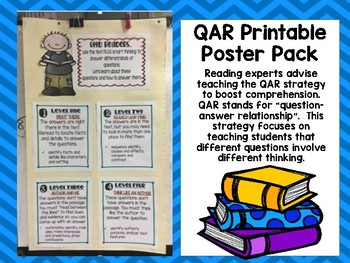
I am so excited to share with you all today! This is one of my very favorite strategies to teach! Question, Answer, Relationship-QAR for short!
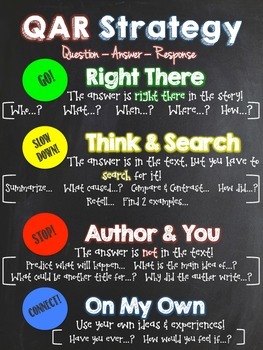
We are moving into the end of the year and that is when the assessments start whether we want them to or not. This strategy is spot on for helping students understand the different types of questions they will encounter & how they can go about finding the answers.
It is important for students to be efficient in answering questions. Understanding what they are looking for is super helpful!
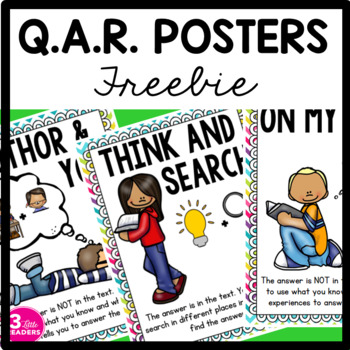
Questions Types:
Right There
Think and Search
Author & U
On my Own
Here is a video that explains the question types and how students can use them to guide their reading.
How can this type of explicit instruction on question types support our learners?
It can help to improve reading comprehension.
Supports students in how to ask questions about their reading and where to find the answers.
Encourages student to think beyond the text and make connections.
Encourages students to use higher level thinking skills while thinking creatively about the topic
Watch a teacher in action as she runs a small group reading lessons using the QAR Strategy!
(Click the Image)
Below you will find some free resources to support your kiddos in small group reading and in independent reading.
Love that this strategy can be used in math too! Try it out with a math word problem or a graphic!
Thank you for another great week at THE VIEW!!!!!! PLCS were awesome with fantastic discussion around building background knowledge and our new Brainingcamp math tools!
You know I LOVE brain research! I stumbled upon an awesome learning strategy that is backed by BRAIN SCIENCE!!!! HELLO!
ELABORATION!
This is all about our speaking and listening standards! Students are asked to explain and describe learning with as many details as possible!
This is a GREAT video about teaching speaking and listening strategies & the Handing off Routine!
By simply going beyond basic recall and encouraging students to make connections new learning will be cemented in the storage parts of the brain.
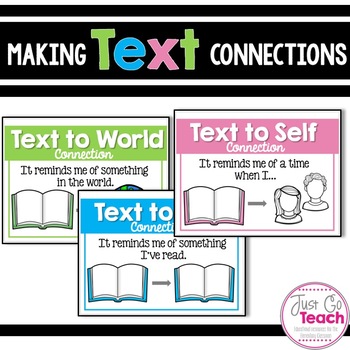
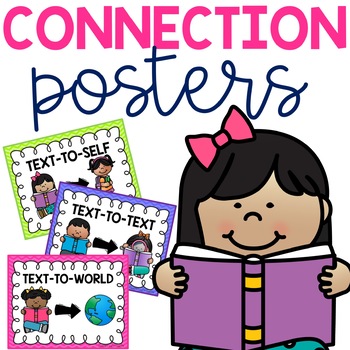
Remember these guys????? Well, let's get going on them! The Science of Reading is ALL about making connections and we want our students to connect to CONTENT & texts! Click the images to grab them for FREE!
Students should be engaging in open ended questions. They can answer with as many details as possible and then head back into check their thinking & elaboration!
Watch this video all about this learning strategy!
Students can engage in this type of questioning through large group class discussions.
Hi All! Thank you so much for an amazing week at PVES! We were sooo excited to have our whole school family back together again!
In PLCs next week, we will be talking about Background Knowledge. Now we all know that our kiddos all come with different levels of schema/background knowledge. We work to build background knowledge through nonfiction texts and videos.
This is a great video from Reading Rockets discussing background knowledge!
While digging for how background knowledge supports SOR I came across The Baseball Study by Recht & Leslie. This friends seems obvious but it in many ways it the opposite of what we have been doing in the classroom with leveling students.
This image from the video says it all!
This study found that prior knowledge/background knowledge creates a scaffolding for information. Knowledge counts in understanding and comprehending a text.
This post from Amplify Blog explains the study in a bit more detail.
So we know background knowledge is important for comprehending what is being read. How do we increase it for our students?
I LOVE this blog post from We Are Teachers! So many good ideas to help increase background knowledge through classroom lessons.
A couple of my favorites from this post are:
#1 Connect with virtual experts: I have had sled dog mushers, bee farmers, turkey farmers, chefs and so many other guests come to my classroom to extend on our learning.
#5 Integrate: Bring science and social studies into your reading block! Pair your fiction books with nonfiction books to build background knowledge.
#7 Don't Skip the Back Matter: I LOVE author studies! It is so powerful to then transfer the author's writing style into your writing lesson.
#15 A little video goes a long way: For us this is easy with our 1:1 technology.
Know that because you are taking the time to build background knowledge for your students, they will be able to distinguish between words with multiple meaning & infer with ease. EL students will benefit when faced with idioms, metaphors and other literacy devices that rely on background knowledge.