Thursday, October 29, 2020

The Reading Wars

Hi All!  Hurricane Thursday was definitely a surprise! Thank you for regrouping and adjusting to a last minute decision that needed to be made!  

I spent the afternoon on Wednesday in an incredible PD about The Science of Reading and the shift our district is making to work smarter and not harder!  

Meaning...we are going to follow the science of how our brains learn to read!  We made this shift last year in math with the addition of our Clusters and the focus on the following:


This year is definitely crazy and we are having to adjust to so much but it is the perfect time to step back and punt!  We can dabble in The Science of Reading and REALLY get a handle on what we want this to look like in our classrooms.  

This article on The Reading Wars says it all! 

WATCH this video on The Reading Wars!!!!!  We are going to heal the wounds! 
WATCH this TOO! 

I know what you are thinking...SCHROEDER!  What does this mean for us?  Well it means we are going to make small adjustments to our instruction to get the most bang for our buck! 

First, friends we are NOT going to be leveling our readers like we have in the past.  (I know, you may need to sit down.). 

Levels are for BOOKS NOT Kids!
  • We will NOT be doing Running Records to determine a level to group students. 
  • We will NOT be reporting to parents a LEVEL as a grade. 
  • We will NOT be having the L group come for guided reading.  
Friends~We are putting the MCLASS anvil DOWN! You are not holding this over your head all year!  Your district supports The Science of Reading!  

Well SCHROEDER, what will we be doing then? 
  • We WILL be doing running records to drive our instruction. (The letter score is for the teacher!!!!!!)You can use any book or passage!!!!
  • We WILL be using decodable readers connected to our Letterland lessons. 
  • We WILL be presenting grade level material in LARGE GROUP! 
  • We WILL spend a good amount of our 90 minute reading block focused on Letterland!
We WILL be moving to STRUCTURED Literacy in place of BALANCED Literacy.  
Wait but what if I teach 2nd or 3rd grade and my kids are reading high levels?

Aren't decodables for kiddos learning to read?  Ours are reading to learn!

NO!  Decodables are fantastic for students at high levels if the teachers connects the text to their Phonics Skills!  
  • Students will work with connected texts based on our Letterland pacing. 
  • They will read grade level texts in small groups and focus on the standards. 
  • Students will interact with the read aloud text during small group-zooming in on certain parts fo the text.  Students will work on higher level questioning and written response. (We want them to be secure with grade level material!)
*This is just a SNEAK PEEK at the direction that MGSD is going in READING.  Remember it is going to be a work in progress this year.  

We are in this boat together!


photo signature.png

Thursday, October 22, 2020

Multi Sensory Learning

Hi All!  Thank you for an amazing week at PVES!  There were so many smiling faces and happy people...what we all have REALLY needed!

I have been dabbling in all that is out there about the Science of Reading and I LOVE that it supports multi sensory learning.  Structured Literacy supports SOR because it is systematic and cumulative!  Read more about Structured Literacy over at Sarah's Snippets!   
I am a huge advocate for teaching to different learning styles.  Check out this quick video about the multi-sensory approach!
The term multi-sensory means that when new information is presented to a students they will interact with that new material using multiple senses all at one.  In a nutshell, the more ways they interact with new material, the more pathways they create for retrieval. 

When planning your lessons, think about visual, auditory & kinesthetic approaches. When I plan my lessons,  I always have something visual like a video or image projected, a song or chant to support the learning & and hand motions! These simple additions give children something to link their learning too. 

Take a look at the Language Triangle! 
SEE HOW it is all CONNECTED!
Think about Quick Coding!  Allowing students to mark up word parts hits visual and kinesthetic learning. Take it to the next level and have your students quick code with play dough or pipe cleaners! That would make one engaging center!


Can we make comprehension multi sensory!  Sure can! Try color coding your graphic organizers & then have your students respond about the text in the corresponding colors!  Check out this JAMboard! 
Can we use the Multi-Sensory approach in math?  
Yep...we sure can! 

It takes us back to the concrete, representational and abstract! 
I love this connection for tapping out numbers.  Reminds be of tapping our letter sounds in words! 
The act of tapping out the numbers allows students to connect symbols to actual amounts.  
It is like FEELING the NUMBER!
Read about more fun ways to multi sensory your math at Understand.org!

Using multiple senses allows student to connect in more ways with new subject matter.  It helps them tap into how they learn best.  What approach they need to take when presented with new material.  

I have been thinking about our 3rd grade Letterland training this week and decided to MULTI Sensory the black line masters to be used in centers.  So SUPER easy to do!

In the first picture, you will see the reading passage for the unit.  This activity would be great for a buddy reading activity!  I used color coding and cut and paste to add the visual & kinesthetic.  The speech bubbles are where the students will be discussing the meaning of the boldface words.  I added the word mapping at the bottom.  

*Echo Microphones would be great for reading the words! 
*And perfect for ROBOT reading! 
Picture 2 is the word sort, again I added the color coding & cut and paste for the visual and kinesthetic.  This could also be put in a pocket chart with words on large cards or create the chart on a shower curtain.  
Multi Sensory learning is about thinking outside the box and upping the engagement through learning styles!  I can't wait to see what you all come up with next week! 

photo signature.png

Friday, October 9, 2020

Positive Self Talk

Happy Fall Break!  I hope you all find a way to decompress and relax.  I am so very proud of all of your hard work and dedication to your students.  Thank you for being amazing.  Thank you for never giving up.  Thank you for being problem solvers, tech support, counselors, entertainers and so much more!

This post may seem like a bit of a hodgepodge but I have some fun things to share! 

SURPRISE...I can't keep this to myself!!!!  
WE NEEEEEED something to look forward too!
THE PEP SQUAD is making a come back!
Our goal for this resurrection is 2020!  It has been a HARD year and we all need to put some PEP back in our step!
Be prepared...after break you are in for some fun surprises thanks to our PEP Squad members.  We have been working franticly behind the scenes to spoil our Patriot Staff!
(There is still time to join the PEP Squad!) 

We will find the POSITIVE in 2020!

Speaking of positive and spoiling check out some of the simple self-care ideas that you can start right away.  


One of my favorites from above is Positive Self Talk.  This has become common language at my house over the years.  Both of my kiddos are athletes and my daughter Lily spent 4 years with a mental strength coach.  She has always stressed POSITIVE Self Talk.  

We have to treat ourselves in a positive way.  Talk kindly to and about ourselves.  
 
This is the cutest video from The Kid President! 

Did you know that positive self talk has some heath benefits too?  
  • Increased Vitality 
  • Greater Life Satisfaction
  • Improved Immune Function
  • Reduced Pain
  • Improved Cardiovascular Health
  • Better Physical Well-being
  • Less stress and destress
Research also suggests people that practice positive self talk may have mental skills that allow them to be problem solvers, think in different ways and be able to handle stressful situations better.  This reduces STRESS!  

Check out this blogpost from Very Well Minded.  Lots of good ideas to help you reframe your thinking. 

My goal since March has been to wake and let yesterday go.  To focus on the day ahead with a positive outlook.  Is it easy?  Heck no but I sure am trying and it is making a difference for me!  

I am trying to check in with my feelings during the day and make sure I am not traveling down that negative road.  My real trick is finding the humor.  Looking for the funny and the light hearted.  

Mr. Rogers says "Look for the Helpers" in a crisis.  I totally agree but I also look for the humor as a way to break the stress level.  I think I have always been a jokester and humor is my love language! 
Why else would I say yes to doing an Instagram review of these teenager sun glasses!  Because I knew I would look hilarious and hilarious makes me happy!

photo signature.png

Tuesday, September 29, 2020

Bringing back some Brain Research!


Hi All!  Today I wanted to spend some time talking about one of my favorite things!  How our brains learn!  I am totally not an expert but the idea of how learning takes place is so interesting. 

I know we are all stressing a bit about getting all the curriculum in when we get back to school and teaching them HOW to be at school!  Let's work SMARTER!  Let's get the most bang for our buck when we are presenting information! 
Have you ever asked your students to keep their eyes up front?   
Have you ever explicitly taught them why you want them to do this? 

It is a total game changer!  Teach your students that when you are presenting a lesson you are attempting to place new learning in their brains through their eyes and other senses!  Seriously-You will have their attention! 

Check out this video & share it with your class!  It tells all about the brain and how it works.  I found that when students understand how learning takes place they are more focused on how they learn best.  Which is so empowering!

I always asked my class this question: 
How do you get information into your brain? The answers are always comical! I explained it to them in a very simple way:

Learning gets into your brain through your eyes, ears, nose, mouth, and skin.  I told my students all about how I created lessons for them with this in mind.

Such as...
Eyes: video, anchor charts, illustrations & presentations
Ears: music, chants & call and response
Nose: smells & meditation
Mouth: call and response, turn and talk, teaching with food!
Skin: hands-on lessons like playdough, shaving cream, & STEM 

These are just some examples of ways we can teach to the senses & the brain!

I also made sure to share that when you first learn something it is placed in your prefrontal cortex.  Then the work begins!  In order to get new learning to your Hippocampus (Your Brain's Filing Cabinet), you must PRACTICE it!  When we practice we create connections within our brain.  Each time we practice the connection becomes stronger.  Practicing new learning in a variety of ways can help make that connection even stronger! 

This "practice" is why spiraling within our lessons is so important.  Each week we have a focus skill/standard.  This skill/standard is what we build our lesson around and what we use to choose text or activities to support the lesson.   

Don't forget about this book on Epic! It is a great book to share with students about how your brain works and learns. 

In order to support those neurological connections made in previous lessons, we must spiral old learning in too!  Helping students make connections to past learning and our focus standard is essential! 
photo signature.png

Wednesday, September 23, 2020

What is SHARED Reading anyway?

What is shared reading anyway?  
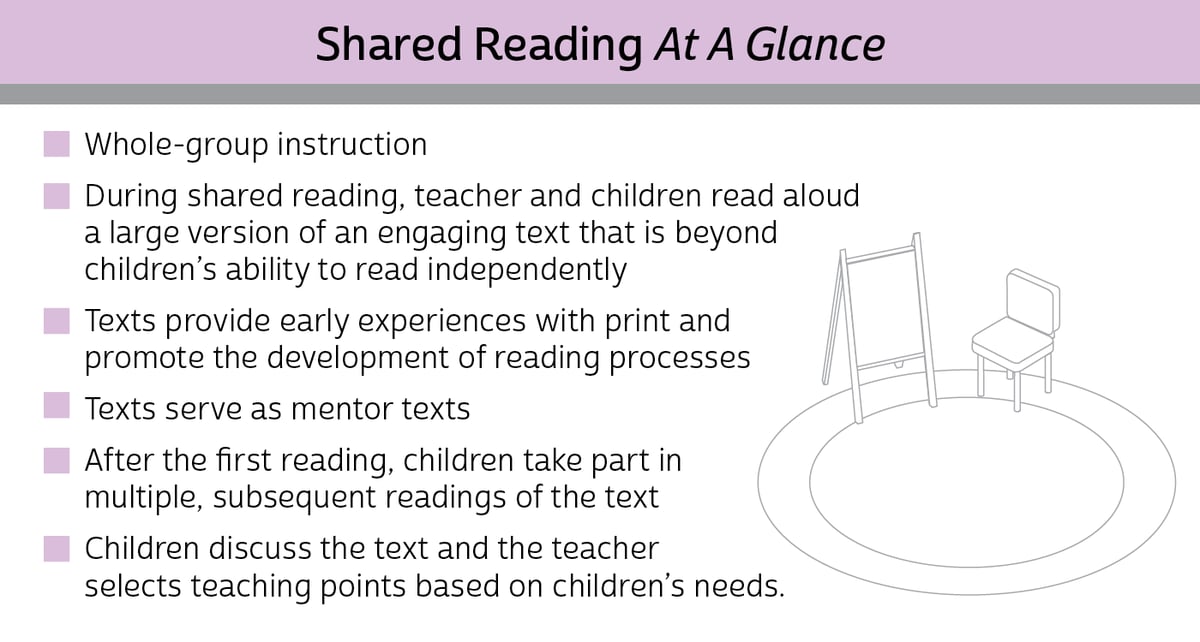
We all know about interactive read alouds, we know about guided reading & independent reading but SHARED Reading is often forgotten or confused with a read aloud.  Check out this video below! 

Today I want to dive deeper into shared reading and share some strategies that can be used to support this quick but MIGHTY type of reading instruction. 

Shared reading only takes around 15 minutes.  It is quick but packed full! Here is what you need to know!
  • Teacher and students read together during this time. 
  • Teacher models and students practice decoding, comprehension and phonics strategies.  
  • It is part of the "WE DO" gradual release model.
Check out this blogpost from F & P!
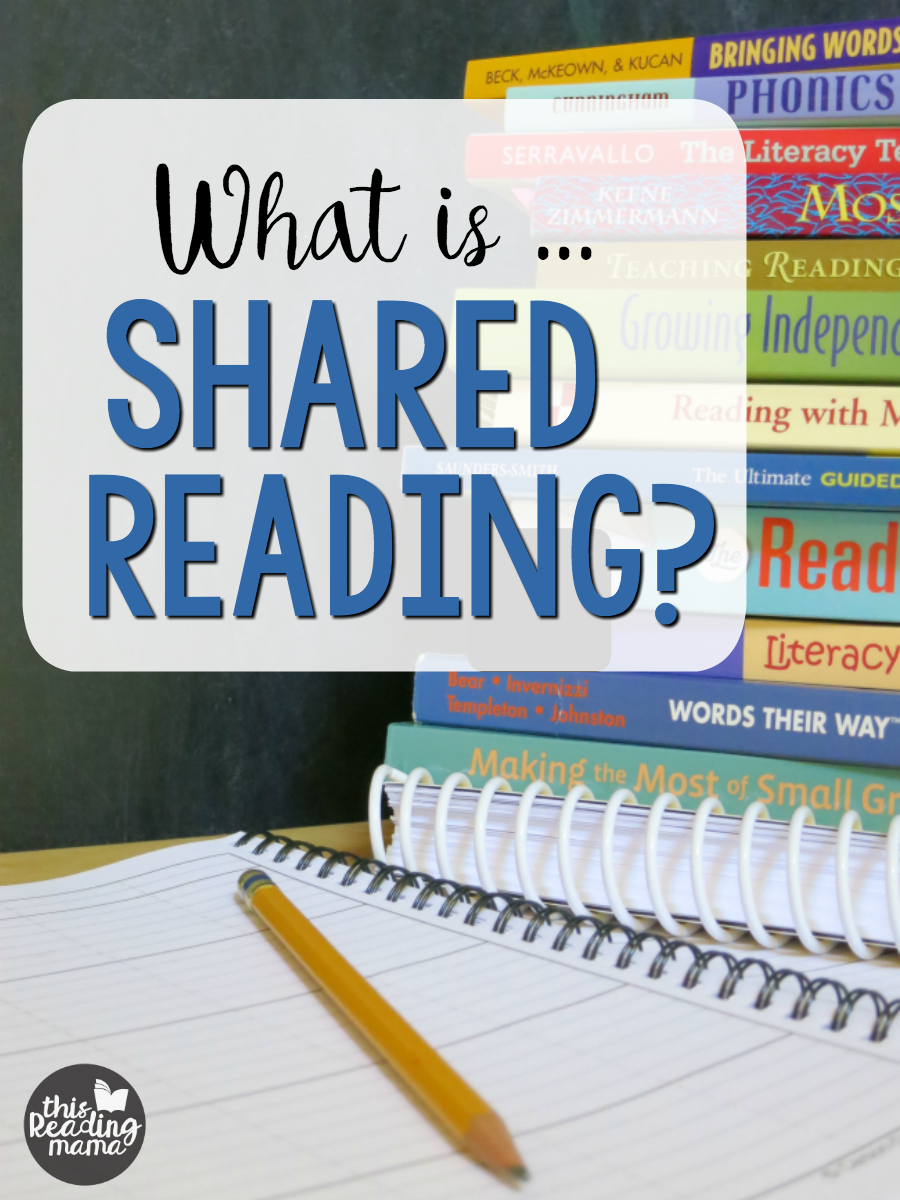
I love the Reading Mama blog!  Check out this post all about Shared Reading.  She has ideas for before, during and after reading activities. Be sure to grab her FREEBIE! 

What do you need to get started?
  • A pocket chart
  • Sentence strips
  • Doc Camera
  • Chart Paper
  • Pointers
  • Markers
  • Dot Stickers
  • Highlighter Tape
  • Text (I LOVE using poetry during this time!) or a GRADE LEVEL text! 
  • Choose a strategy or skill you want to focus on! 
Using poetry during this time is a super easy way to get some phonemic awareness in! Remember, phonemic awareness is about what we hear like rhyme and alliteration.  

For example, if I chose a poem, I would print a copy for each student and we would glue it into our poetry books.  Students would then meet on the carpet. (I would always write the poem on sentence strips to use in the pocket chart.) But chart paper or doc camera would work too!  

During the shared reading of the poem, I would first model reading the poem and making sure to stop at the end of each line to model the line breaks. We would then echo read the poem and clap the beat.  This helps then identify the rhyme in the poem.  We might also circle rhyming words or sight words.  

Check out the other great ideas below! 
  • Use marker or highlighter to identify sight words in the poem
  • Use the sentence strips to leave out words creating a CLOZE reading activity.  (Like Guess the Covered Word) 
  • Use pointers to model tracking.  (Students can even help with this pointing once they are comfortable with the tracking process.)
  • Use the dot stickers to mark each word by placing it under.  This will support tracking.
  • Model fluency by paying attention to punctuation.  
  • Use highlighter tape or markers to quick code the poem!
  • Discuss the meaning of the poem or the author's purpose.
  • Look for cause and effect or a problem and solution. 
Remember you only have 15 minutes so choose one thing each day to do with your text! 
Example:
Monday: Read the text to the class (Model Tracking) & have them echo read with you & add dot stickers for tracking. 
Tuesday: Read the text together & hunt for sight words & discuss comprehension. 
Wednesday: Read the text together while tracking & choose a sentence with a tricky word and practice decoding.  
Thursday: Read text together & quick code tricky words.
Friday: Read text in different voices & allow students to create an illustration and write about the text. (Make a class book!)

Does it have to be a poem?   
Nope!  Big Books are great!  And digital books & novels too!  Remember in shared reading you want the students to be able to see the text (or have a copy of the text.)  so that they can work on decoding & phonics skills.  Using a document camera or making copies of a certain piece of text will work super well!
 
Don't forget!!!!  We have sets of these in our PLC room and on ParkView Prime! 

These will be perfect when we are back to in person teaching! 
FINGERS CROSSED!!!!

photo signature.png

Wednesday, September 16, 2020

Retrieval Practice & Standard Assessment

So... we are several weeks into first quarter and your students are starting to settle in.  You are teaching and they are raising their hands to ask & answer questions.  You have done some CFA work and you are collecting data toward mastering of reading and math strategies.  

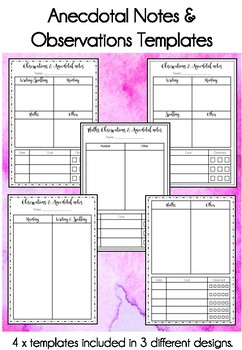
Combining what we are seeing in class with their independent work is vital to understanding their Istation data and true understanding of the standards.  Using anecdotal notes is a simple and quick way to keep track of where your students are and where they need to go! Check out these FREE templates for note taking below!

Another great way to check in on learning is Retrieval Practice.  This strategy is a GREAT way to help you add to your anecdotal notes about individual students and cement learning.

It is so interesting to hear the reasons why cognitive psychologists support retrieval practice as a way to cement learning for students.  By using low stake quizzes to check in on students learning, you are able to force them to "RETRIEVE" new skills and  improved test scores.  The fact that the students were "quizzed" more allowed them to retain more information.

Check out this video all about Retrieval Practice!
Basically, if we spend more time asking students to retrieve information out of their brains and less time trying to put things in there... they will learn more.  

So,  how do we make this happen in the classroom?  Check out these super simple and easy strategies below!

Think Pair Share: Ask students to share what they have learned from a lesson with a partner.  

In a virtual world, students can simple share with the teacher or have them use a family member at home during independent time or try out this Think Pair Share in Jamboard!


Low Stakes Quizzes: Quizzes or check ins that don't count against their grades.  Use games like Quizzes, Kahoots, and Polls.  These all work well in a virtual world!  Add in a Google Form and you will have a spreadsheet of information! 

Brain Dumps or Storms: KWL, Can, Have, Are charts are GREAT ways to allow students to retrieve learning and then organize it.  The Teacher Toolkit has a great video on KWLs.  Check it out below!  I have seen several KWLs this week!  Such a powerful graphic organizer for nonfiction text!

Exit Tickets: A perfect way to do a QUICK informal check on learning.  Exit Tickets can be paper pencil or even verbal.  Check out Teach Thought for digital Exit Tickets!
Be sure to keep in mind, retrieval practice is NOT assessments!  Retrieval practice is ABOUT learning!  There is POWER in repetition! 

Know that when using retrieval practice you will need to do it in small bursts over time.  When students struggle to recall concepts, they are actually making stronger connections about the topic in their brain. 

Check out these retrieval practice questions and guide to get your students thinking and retrieving!  Thank you Retrieval Practice on TPT!


photo signature.png

Thursday, September 10, 2020

Q1 Week 4 Google Keep

Hi All,
I want you to take a look at the top of your screen as you read this post.  How many tabs do you have open?
I bet you can't show that number on your fingers.  Because like you, I have about 1,000 tabs open.  Not that I am using at this time but open just in case I need them.  You know, like a book mark.  

We are so overwhelmed with trying to keep up that we are afraid to close something and not be able to find it again.   How many of you have basically pulled your hair out trying to find something in your email?
We have Google Drive but let's be real...if you can't remember the name of the document it is not easy to fine.  

I want to help you organize your tabs and also allow you the satisfaction of closing them at night.  It is pretty liberating!  

I am going to share a simple tool you might already be familiar with and with some help from my blog friends, take it to the next level!

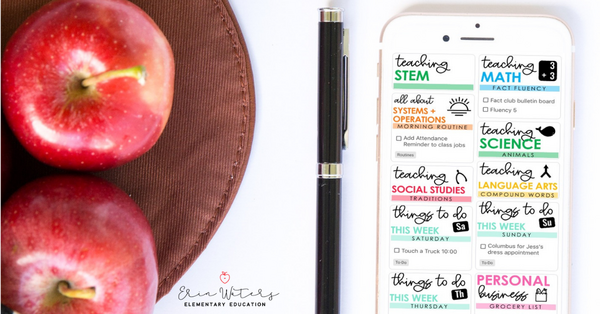
GOOGLE KEEP! Remember that guy?  He is located over in your waffle!  Google Keep is a simple tool that you can use to create to do lists with links to those darn tabs you have open.  Create a note for each tab and you can even create a check list & a reminder! 

Check out these video: Get started QUICK with the first video or take it to the NEXT LEVEL with he second one!
.     
If you want to get a little fancy with your Google Keep notes you have to check out Elementaryedu.com.  So fun!  Erin has a video to show you how to use  templates for your notes and so much more!

Be sure to click the image below and grab here Freebie to get you started!

Download the app on your phone or ipad so when you are on the go you still have all your notes! 

Check out my Google Keep & Notebook!  Saved my MIND!!!!  I can now close all my tabs at the end of the day and find anything I need on the go! 

Here is my Notebook Template!  Give it a try and let me know if you need help! 


photo signature.png