Thursday, August 29, 2019

Gallery Walk Strategy

This week in PLC,  we used the instructional strategy: Gallery Walk.  A gallery walk was one of my go-to strategies because it can be used across the curriculum.  It works great for reading & math and is also great for science and social studies!   Plus, students LOVE it! 

What is a Gallery Walk?
A Gallery Walk is a kinesthetic and cooperative learning strategy that helps students engage or review new information.  It most resembles the Jig Saw strategy. 

To set up a gallery walk, you will need to decide first on the content. 

  • How it will be displayed.
  • How students will show their reaction or learning.

Your students can also have a clipboard and a sheet of paper/recording sheet to use as they walk around or their ipads to take snapshots.  The goal is for them to view content being represented in different ways.  

I often had my students circulate around the room or their tables for our Gallery Walks. You can number or group them if you want the students to see specific things.  

In PLC, we simply walked around and viewed our Connect 4 Boards.  The data collected in the walk was what spring-boarded our discussion and our data dig into iStation. 

Below are 2 examples of ways to use Gallery Walks:


This is an example of one of my FAVORITE gallery walks!  We were studying human body systems in first grade.  I took it a step further and added a "costume" to turn my little learners into doctors!  
Here is an example of the recording sheet we used:
You can click the recording sheet to read more about our lesson.  

Mud and Ink Teaching has a great blog post all about setting up a gallery walk.  Click the image below!

With word problems making their way into our math lessons this month,  a GALLERY WALK would be an awesome way for students to view other student's problem solving and compare it to their thinking.  
Below you see a photo of a word problem and different students working to solve it.  They worked their way through a gallery of problems.  As they completed the word problem, they left their sheet for the next group to view their thinking.  
*An idea to help your gallery walk be more meaningful is to have students leave a compliment & suggestion on the work or next to the work they are observing.  

I LOVE this compliment Tree idea!  Your recording sheet could be an image of a tree next to your content.  Students can simply write compliments on the tree. Check out this video on how to give a compliment and the tree! 
 photo signature.png

Thursday, August 22, 2019

A Focus on Differentiation

Let's talk differentiating! 

In a nutshell, differentiating is tailoring work to meet individual needs in the classroom.  You can differentiate contentproductprocess, and learning environment. Using continued assessment and flexible grouping allows continued success as students progress. 

This is a great post that breaks down the different areas that can be differentiated in the classroom. 

Through our "Connecting with DATA" this week, we were able to determine groupings for our students and drill down into areas that they need remediation or enrichment in.  How do we differentiate for these groups of learners?

During our Patriot Blocks, students can be grouped across the grade level for reading and math. 

Along with our data discussions in PLC, be sure to check out iStation! 
  • The Priority Report will group your students based on skills. It will also provide a link to a resource for the individual group. The report groups students based on data & gives lessons to support the skill! 
  • The Classroom Summary Report summarizes how students are performing on Istation assessments and instruction. This report gives you possible grouping information like Lexile level, percentile, grade level equivalency, areas of need, and so much more.
Check out these examples of differentiating in the K-3 classroom and how we can better meet our 
M-Powerment Strategies!
Watch this video all about differentiation!  


Content: 
M-5 Differentiation and Personalization & M-4 Data Driven Instruction

  • Using reading materials at various levels.
  • Providing a listening option for reading materials.
  • Leveling spelling patterns or vocabulary words. 
  • Presenting materials with different learning styles in mind.
  • Meeting in small groups to reteach or frontload information. 
Process:
M-9 Students Skilled for Success
  • Providing tiered activities that allow students to work on material with different levels of support. 
  • Developing centers with learning styles in mind for students to encounter at their own pace. 
  • Using timers, agendas, or a check-in system so that students can complete work at a slower pace.
  • Providing manipulatives for reading and math work. 
Product: 
M-10 Student Engagement & M-7 Checks for Understanding
  • Encouraging student different ways to express their learning. 
  • Providing rubrics that match different learners.  
  • Allowing students to produce work in groups with predetermined guidelines of what the project will contain. 
Learning Environment: 
M-1 Collaborative Culture of Caring
  • Providing a quiet working environment and a place for students to collaborate and work in pairs or groups. 
  • Using learning activities or tools to meet the diverse needs in your classroom.  
  • Have clear and consistent guidelines for independent work/group work. 
  • Keeping to a predictable routine to provide independence for all learners. 
  • Create a learning community by helping students understand their unique learning styles and acceptance for other's styles and needs.  
Check out these simple differentiation ideas from Performing Education!


Good Stuff from The Primary Gal!

Let's not forget our gifted learners!  They need differentiation too!  Check out this blogpost for Miss Giraffe!


 photo signature.png

Wednesday, August 14, 2019

Q1 Number Talk Review

This week on the blog, I wanted to revisit the information from last year on Number Talks.  They are the perfect warm-up to your math workshop!
Think of number talks as building your students' MATH SCHEMA!  The more strategies that are discussed, modeled and shared the more NEW mathematical knowledge they can draw from when problem-solving. 

Mental math is so important and is an essential part of our students' mathematical toolkits!   

Consistent Number Talks give students the confidence to manipulate numbers/math in a way that makes sense to them. 

Here are some tips from our Math Coach's presentation:


She shared an AWESOME website that had tons of quick-ready to use number talks. It is called, Which One Doesn't Below.  Check it out below!
Be sure to check out NC Tools for Teachers!  Within each cluster, you will find premade Number Talks that you can download.  They are a great springboard for building future lessons for your students.  
I found this Suggested Mental Math Strategies on NC Tools for Teachers.  I love that it is broken down by grade level and there are links to video snapshots of lessons that can be incorporated into Number Talks. 
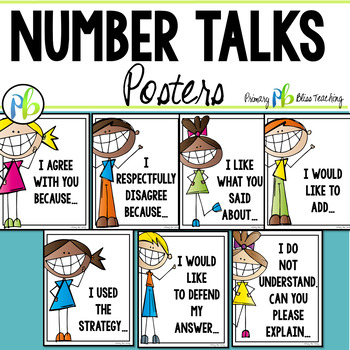
I also found these FREE printable posters to add to your number talks from Primary Bliss!  

I love the "I would like to defend my answer"poster-HELLO PEAK!

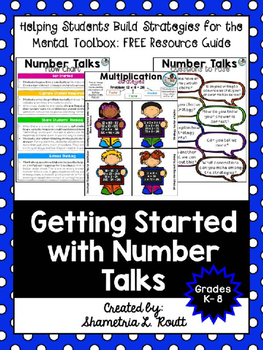
The Routty Math Teacher also has a great FREE file on getting started with number talks.  

A NUMBER Talk in K:

A NUMBER TALK in 1st Grade:

A NUMBER TALK in 2nd Grade:

A NUMBER TALK in 3rd Grade: 

This video really stresses the importance of number talks.  It digs into how number talks level the playing field for students who think differently about math. Allowing students to have the opportunity to use trial and error is essential in building confidence in math. 

So in just 15 minutes a day, you can start improving your students' feelings about math and increase their number sense while also providing a safe place to share and learn. 

Happy Planning!

 photo signature.png

Thursday, August 8, 2019

Whole Brain Teaching

Welcome back, FRIENDS!  I am so excited to get back into the swing of things.  

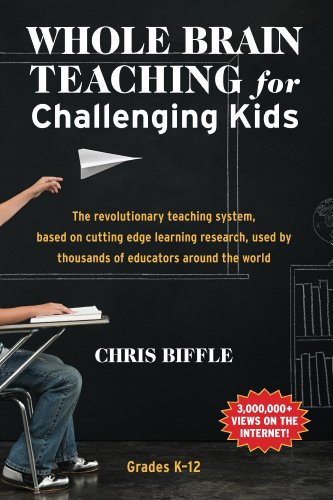
This week on The BLOG,  we are going to be jumping into the world of Whole Brain Teaching! I love this book by Chris Biffle.   
Chris shares that WBT is more like a lively game than a traditional classroom management system.  But like with any game, there are rewards and penalties.

Take a tour of Whole Brain Classrooms from 
Chris Biffle!

This idea really spoke to me when I read it.  I want my classroom to be run by my students, I want it to be lively, I want them to learn through real-life positive and negative consequences.  

This quote shaped my whole philosophy on classroom and behavior management! 
The WHOLE BRAIN TEACHING SECRET: "if a student's whole brain is involved in learning, there isn't any mental area left over for challenging behavior."  

I am so excited to see Whole Brain Teaching strategies taking place in our classrooms at Park View!  Teachers and students have started by simply adding morning meeting to their daily routines and embedding the Whole Brain Teaching rules! 

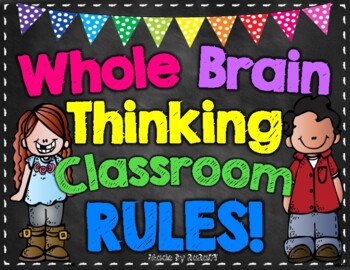
I LOVE these fun colors by RaraDT on TPT.  Grab them for FREE by clicking the image! Be sure to give her store a follow!
I always print out the rules and have them posted in the classroom. 
 Make them a part of your morning meeting!
Check out my Morning Meeting Manuel!  
*Let me know if you want a copy of it!
See some added gestures from WBT!
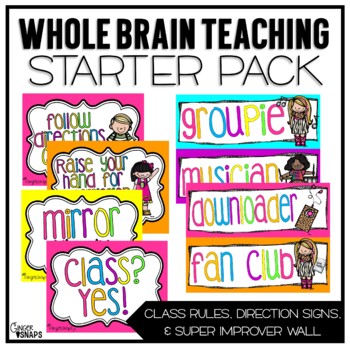
Ginger Snaps on TPT has a fantastic FREE WHOLE Brain starter pack.  Grab it below!
Remember Summer Institute? Giving your students a concrete example and building their schema around behavior expectations is just as important as it is in core subjects!

I am going to end with some classroom tips and tricks from one of my favorite blogs: One Sharp Bunch!  This is a sit down in a comfy chair with a cup of coffee kinds blogpost!  Tons of things to add to your teaching toolbox!
 photo signature.png

Wednesday, June 5, 2019

The Summer Teacher


U MADE IT!  Summer is here and you all are in need of some MUCH needed summer care! 

Just in case you weren't sure...26 Signs You're a Teacher on Summer Break!  We Are Teachers has some funnies for you to check out as you begin to unwind. 
This Ted Talk is focused around the self-care for teachers.  It is so important for all teachers to take extra care of their body and mind all year long.  The summer is a wonderful time to get a good start on a self-care routine for yourself. 

Speaking of yoga...Check out this Yoga for Teachers with Adriene!

If you are looking to do some retail therapy this summer...be sure to check out this post from We Are Teachers!  Tons of discounts for teachers!

Speaking of yoga...Check out this Yoga for Teachers with Adriene!

If you are looking for some professional reading, Education Degree has compiled a fantastic list for teachers!  Be sure to check it out below.  I LOVE The Book Whisperer!


I know our summer is short this year, that is why it is essential to take some time to unwind.  You all deserve it!  Thank you for everything you do for our PVES students & families!

Have a fun and safe summer!

 photo signature.png

Tuesday, May 28, 2019

Quarter 4 Virtual Reality

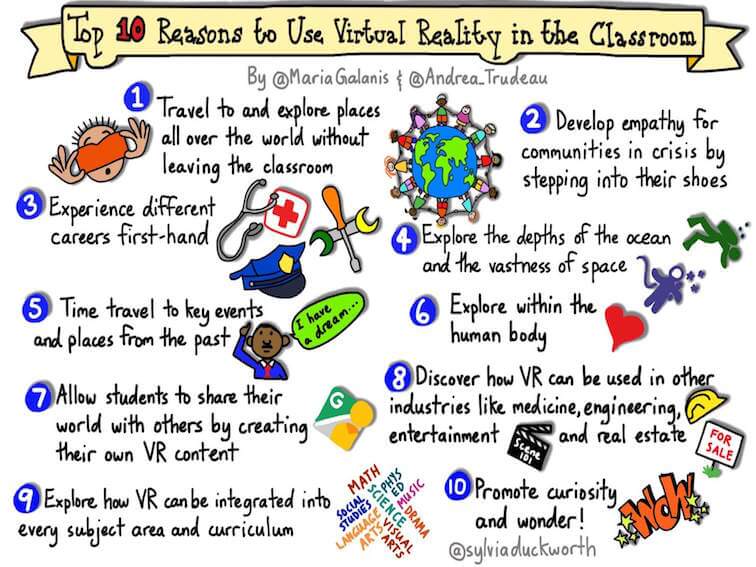
So... testing is done!  There are only days left.  That makes it the perfect time to check out Virtual Reality!

Recently, our Park View PTO was able to purchase 2 class sets of VR heads sets.  They are located in our media center and are ready to be checked out!  

What is Virtual Reality? 


What is Google Expeditions?
Check out this LIST of Google Expeditions created by MGSD!  When planning your expedition think carefully about your science and social studies standards.  

Use Command F to search for a specific topic. Scroll through the green highlighted expeditions and choose one that will fit your needs.  

How do you check out VR for your class? 
  • Simple head to our Park View Prime and scroll to slide 48.  There you can check out a class set or a small group set of 10.  


  • Be sure to book time with your IC if you need support.
  • Head to the library and make sure that the tablets and VR headsets are charged.  It is SIMPLE!  Just plug them in. 

 (Mrs. Schroeder or Mrs. Harkey can help you with this!)   

VR is a perfect opportunity to bring learning to life!


 photo signature.png

Thursday, May 23, 2019

Conferring with Readers

Hi All!  Welcome Back to me and our Friday Blogpost!
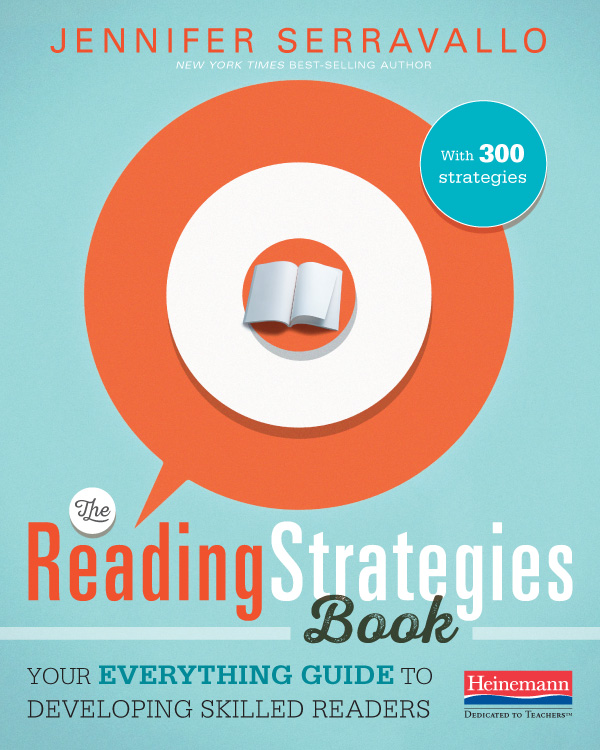
I am so excited to be blogging again for you all!  While on leave,  I spent some time reading The Reading Strategies book by Jennifer Seravallo!
Check out this study guide HERE!

We have several copies in our school library!  

Check out this book walkthrough with the author!

I have to say,  I was so proud of PVES!  We are already doing so many things that Jennifer suggested to support great reading instruction.  

My BIG take away and something I want us to dive into more next year is the idea of conferring with readers!  Seravallo is a huge supporter of giving students some 1:1 reading instruction.

What is a Reading Conference? 
A reading conference is a 5-10 minute meeting that takes place during Reader's Workshop.  During this meeting, students are given the opportunity to retell/share about their INDEPENDENT Reading book.  
  • Teachers can call students to a separate table to meet or just sit next to them where they are reading in the classroom. 
  • Students can share about their book to aid in comprehension. 
  • Teachers can listen in as a student reads to check for fluency and to make sure the reading level is appropriate. 
  • This is precious time during the day that teachers get to spend some much-needed 1:1 time with students. 
  • Teachers that confer with their readers know their students as little people and as readers!
What does a Reading Conference look like?
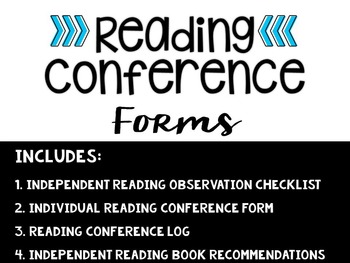
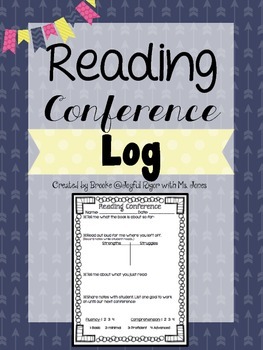
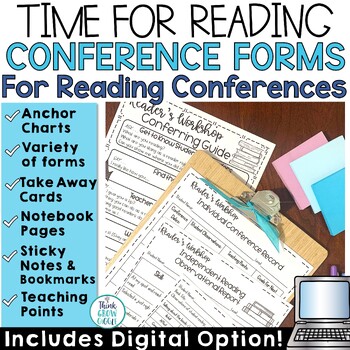
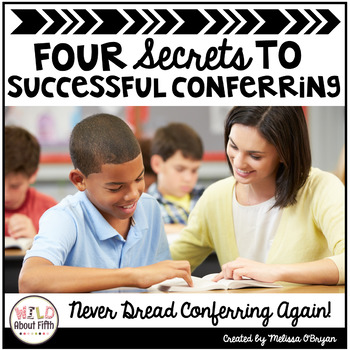
Are there forms to help you document your Reading Conferences?  Yep!   Free Forms!

From The Teacher's Market


Joyful Rigor with Ms. Jones

I love this blogpost from The ABCs with Mrs. B!  She shares how simple conferring can really be:) 
This is also a great product for sale on TPT from Think Grow Giggle.  I love the after conferring slips for students.  

This is a FANTASTIC Free file from Wild About Fifth!


 photo signature.png